
The marketplace works; the store does not
Customers can find and buy the product on a marketplace, but the brand’s own store gives them little reason to switch.
D2C & commerce
For brands that already sell through marketplaces and want a Shopify or D2C store that explains the product properly, works well on mobile and supports repeat purchase.
Discuss your online store ↗Why an owned store matters
Marketplaces make products easy to discover and compare. A brand-owned store can explain the range in more depth, collect first-party customer information and shape what happens after an order.
The aim is not to leave Amazon or Flipkart. It is to give customers a sound reason to buy direct when that option suits them.
Customers can find and buy the product on a marketplace, but the brand’s own store gives them little reason to switch.
Collections, product details or mobile navigation leave important questions unanswered before purchase.
The page does not continue the offer or product context that brought someone there.
Order updates, customer data and follow-up are not set up to support repeat purchases through the owned channel.
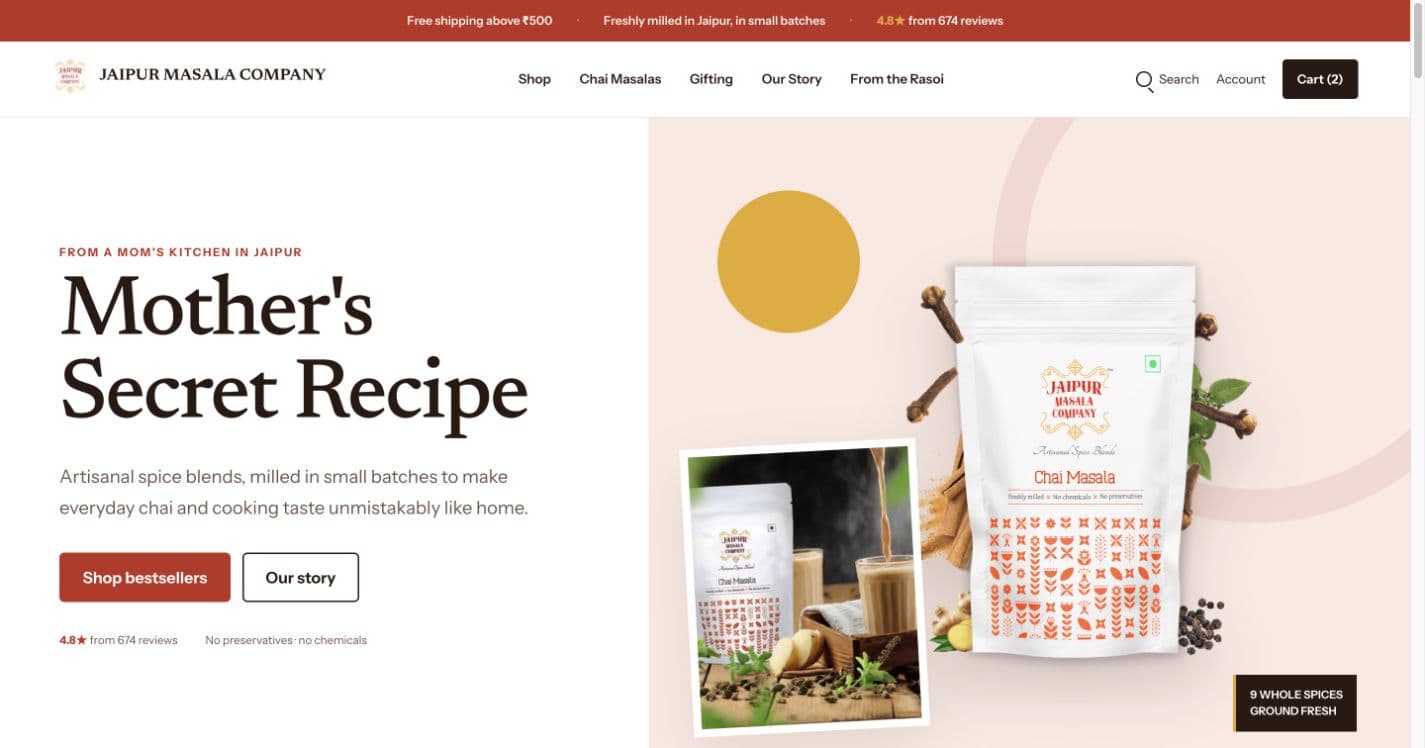 Live concept demo
D2C website demo
The Jaipur Masala Company concept shows how product discovery, brand story, customer proof, gifting and editorial content can work as one direct-store experience.
This is a high-fidelity redesign demo built from public brand and product information, not a live checkout store or a claim of measured client results.
What we can work on
The scope can be a full Shopify build, a redesign or a focused repair to the pages causing the most friction.
Build or redesign the storefront around the catalogue, buying questions and the way the team manages products.
Fix the points where customers struggle to find, compare or buy the right product.
Set up the tracking and customer communication needed to see what happens after a purchase.
Already have a Shopify store? We can review the mobile experience, collection structure, product pages and checkout before deciding how much needs to change.
Send us the store linkHow the work runs
Catalogue structure, fulfilment constraints, discovery sources and measurement all affect what is sensible to change.
Check the catalogue, marketplace context, mobile experience and current buying path.
Choose the product, content and buying-path changes that remove the most friction.
Create the page logic, interface and reusable commerce patterns.
Implement, test across devices and prepare measurement before launch.
Use real behaviour to shape the next conversion and retention priorities.
Best suited for
Recommendations are shaped around the catalogue, customer and operating constraints. No revenue, ranking or conversion outcome is guaranteed.